
Last updated November 25, 2026
 Whole-home duct cleaning
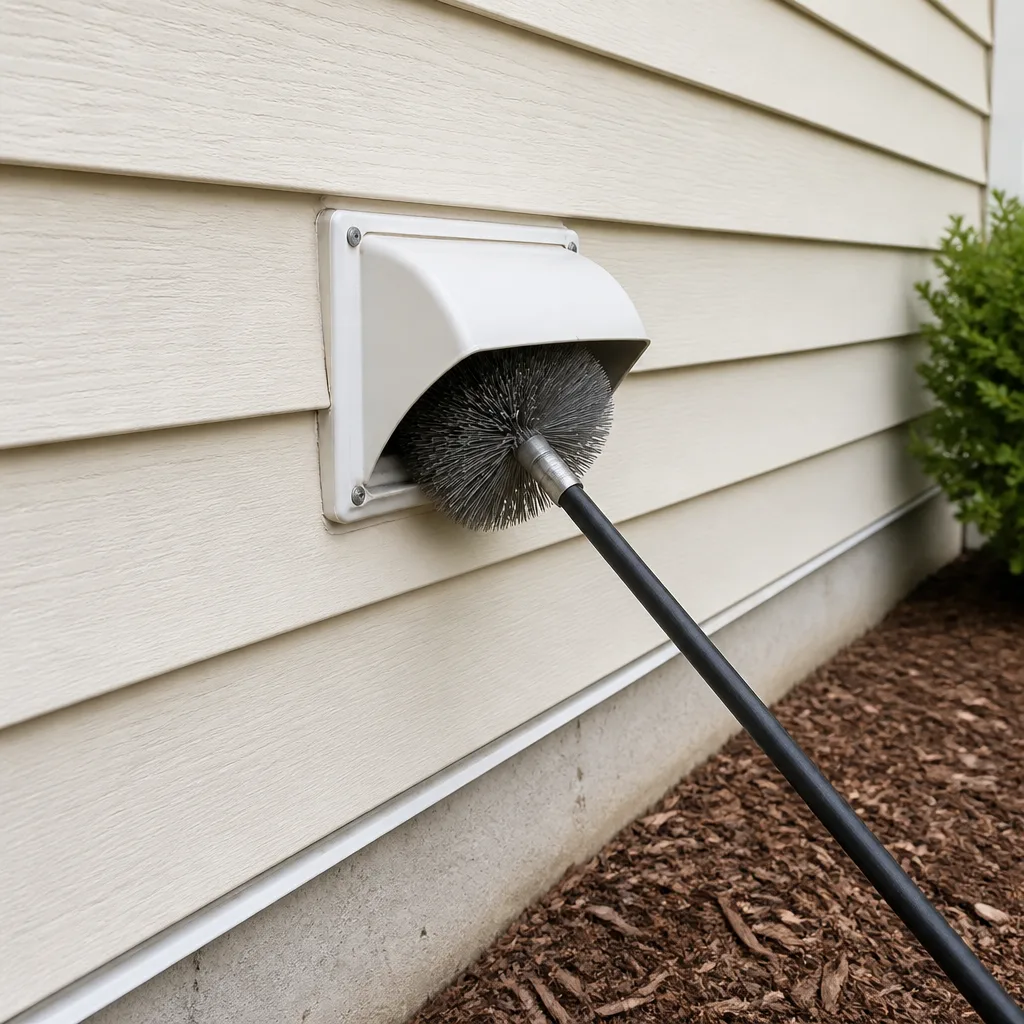 Dryer vent cleaning
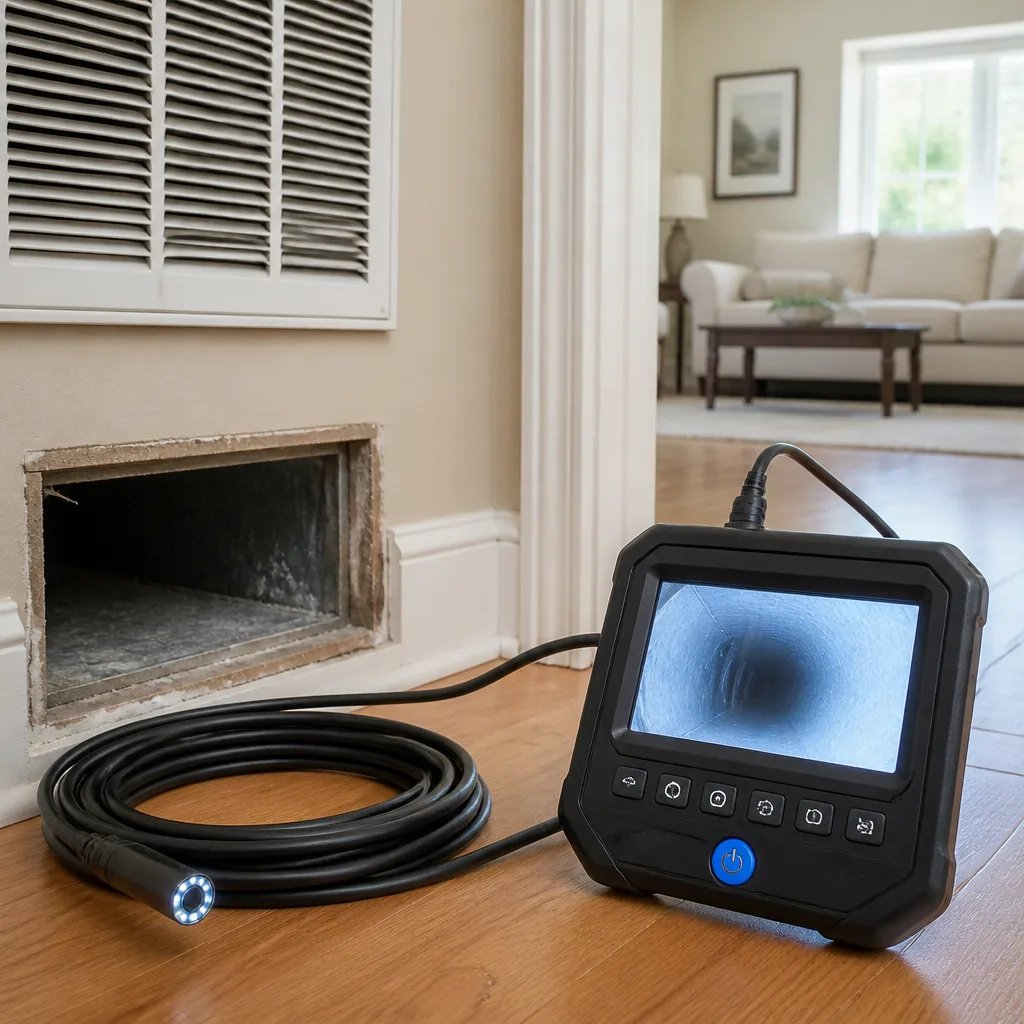 Camera inspection
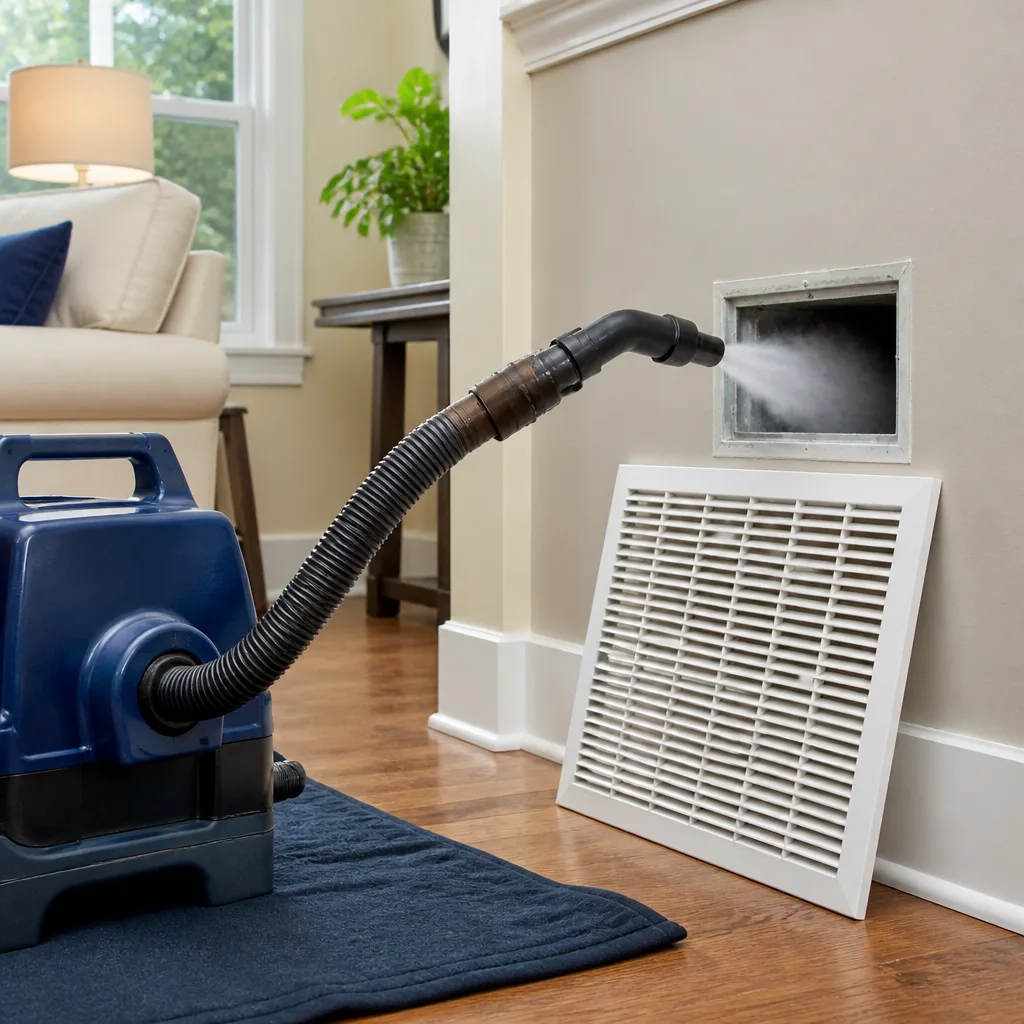 Sanitizing & deodorizing
Whole-system duct and dryer vent check with before-and-after photos - you see exactly what came out of your vents
That "$99 whole-house special" is a bait ad - the real number appears once they are in your hallway, or the "clean" is a shop-vac at the register. We photograph the inside of your ducts before and after instead.
Air Duct Cleaning Maintenance Schedule: What to Do and When
Most duct cleaning advice you’ll find online is a single number: clean every three to five years. That number ignores almost everything that actually fills your ducts. A home with two shedding dogs and a recent kitchen remodel has a different contamination curve than a child-free condo with a high-MERV filter and a system that runs six hours a day. Utah’s dust season adds another variable most generic schedules never account for. In this guide we’ll show you a maintenance calendar built around those real drivers, with baseline intervals, adjustment factors, and the homeowner tasks that actually stretch the time between professional cleanings. We’ve built this from what we see working in Lehi homes, and it’s written to be used, not skimmed.
Quick Answer
Most homes in Utah should have their ducts professionally cleaned every three to five years, but that range shifts based on pets, renovation dust, allergies in the household, and how hard your HVAC system runs. In Lehi specifically, the highest-value windows are late winter (after heating season) and early spring (before cooling season). Between professional cleanings, monthly filter changes, yearly register wiping, and visual checks under registers keep contamination from building faster than it needs to.
Styles & brands we work with
- Whole-home duct cleaning
- Dryer vent cleaning
- Camera inspection
- Sanitizing & deodorizing
Table of Contents
- Why the “Every 3 to 5 Years” Rule Falls Short
- Baseline Intervals by Home Age and Duct Material
- Adjustment Factors: Pets, Renovations, Allergies, and Utah Dust
- Homeowner Tasks vs. Professional Tasks
- Seasonal Timing in Lehi: When to Schedule
- Using Your Filter’s Loading Rate as a Contamination Gauge
- The Maintenance Tasks Most Homeowners Skip
- Signs You Should Move Up Your Cleaning Date
Why the “Every 3 to 5 Years” Rule Falls Short
The EPA’s widely cited guidance on duct cleaning boils down to “clean as needed,” with no fixed interval. That standard was set long before open-concept floor plans, high-MERV filter marketing, and variable-speed air handlers became common in new builds. Today’s homes move air differently than the homes that guidance was written for. The result: a rule of thumb that’s simultaneously too aggressive for a clean, low-occupancy home and far too lenient for a household with pets, allergy sufferers, or a recent remodel.
Duct contamination isn’t linear. It accumulates in layers, and the rate depends on what’s entering the system, how much air is moving through it, and how well the system is sealed. A leaky return in a Lehi garage or crawl space pulls in dust every time the air handler cycles. A sealed duct system running a high-quality filter stays cleaner, longer. That’s why we approach maintenance as a variable-interval schedule rather than a fixed calendar. It’s the same reason we emphasize duct repair and sealing alongside cleaning: a leaky system recontaminates itself within months regardless of how thoroughly it was cleaned.
What this guide does instead is give you a baseline for your home type, then a set of adjustment factors you apply to that baseline. Think of it as a personalized schedule you update as your household changes, rather than a single number you memorize and forget.
Baseline Intervals by Home Age and Duct Material
Start with a baseline. These are typical starting intervals before adjustment factors, based on common home and duct types we encounter around Lehi and the surrounding Utah Valley. They aren’t a substitute for an inspection, but they give you a realistic planning number.
Home Age
- New construction (under 5 years): First cleaning at the 2 to 3 year mark. Construction dust and drywall particulate settle into ducts during the build and often aren’t fully cleared by the builder’s rough clean.
- 5 to 15 years old: Every 3 to 5 years, assuming good filtration and no pets.
- 15 to 30 years old: Every 3 to 4 years, with an inspection sooner if you’ve never had the ducts cleaned. Older systems often have developed small leaks at joints and boots that accelerate contamination.
- 30+ years old: Every 2 to 3 years, with a duct inspection at the first visit. Aging flex duct and deteriorated sealant are common in homes this age.
Duct Material
- Sheet metal: The easiest to clean and the most durable. Standard baseline applies; professional rotary-brush cleaning (which we run through Rotobrush and Nikro equipment) restores these well.
- Flex duct: More prone to sagging and internal ridges that trap debris. Shorten your baseline by about a year.
- Ductboard: Porous interior surface holds contamination more readily. Shorten baseline by a year and prioritize sealing any compromised sections.
Add these two together conceptually: a 10-year-old home with flex duct lands closer to every 3 years, while a 10-year-old home with sheet metal and a good filter easily stretches toward 5. We see plenty of Lehi homes in both categories, and the difference in what the ducts look like at the three-year mark is significant.
Adjustment Factors: Pets, Renovations, Allergies, and Utah Dust
Once you have a baseline, adjust it. These are the variables that most dramatically change how fast your ducts load up. Apply each one that fits your household.
Shorten Your Interval If You Have:
- Pets (especially dogs that shed): Reduce by one year. Pet dander and hair ride on return air and settle along the duct floor.
- Recent renovation (within 12 months): Reduce by one to two years, or clean immediately if the project involved drywall, sanding, or demolition. Construction dust in ducts can circulate for years if not extracted.
- Allergy or asthma sufferers in the household: Reduce by one year. Cleaner ducts lower the particle load the whole system distributes.
- Utah’s spring dust season: Homes with windows open during spring dust events or near active construction sites load up faster. If you regularly see visible dust on registers after a windy stretch, budget for a shorter interval.
- Smokers or wood-burning stoves in the home: Reduce by one year and consider sanitizing after each professional cleaning.
- Older, leaky duct system: Reduce by one year and plan a duct sealing visit. Sealing prevents recontamination, which is where the greatest long-term savings live.
You May Extend Your Interval If:
- No pets, no allergy sufferers, and no smokers in the home.
- Filter changed on schedule with a quality filter.
- Duct system sealed and verified.
- Home is newer and well-maintained.
In our experience across Lehi, most homes land 12 to 18 months shorter than the generic 3-to-5 rule once all factors are applied. That’s a meaningful difference in both air quality and how much work each cleaning needs.
Homeowner Tasks vs. Professional Tasks
A lot of what keeps ducts clean is work you can do yourself between professional visits. That said, duct interiors require negative-pressure equipment and rotary agitation to clean properly. Here’s the honest split.
Homeowner Maintenance (Do These Yourself)
- Change or clean your filter every 1 to 3 months, based on the filter’s MERV rating and your home’s dust load. Write the change date on the filter frame with a marker.
- Wipe down supply and return registers monthly with a damp cloth. Dust on registers collects and eventually migrates into the ducts.
- Vacuum around return grilles with a brush attachment so surface dust doesn’t get pulled in on the next system cycle.
- Do a visual check under a couple of registers two or three times a year. A flashlight and phone camera are enough.
- Keep the area around the outdoor condenser clear of debris and vegetation, so the system isn’t working harder than it should.
Professional Tasks (Don’t Try These at Home)
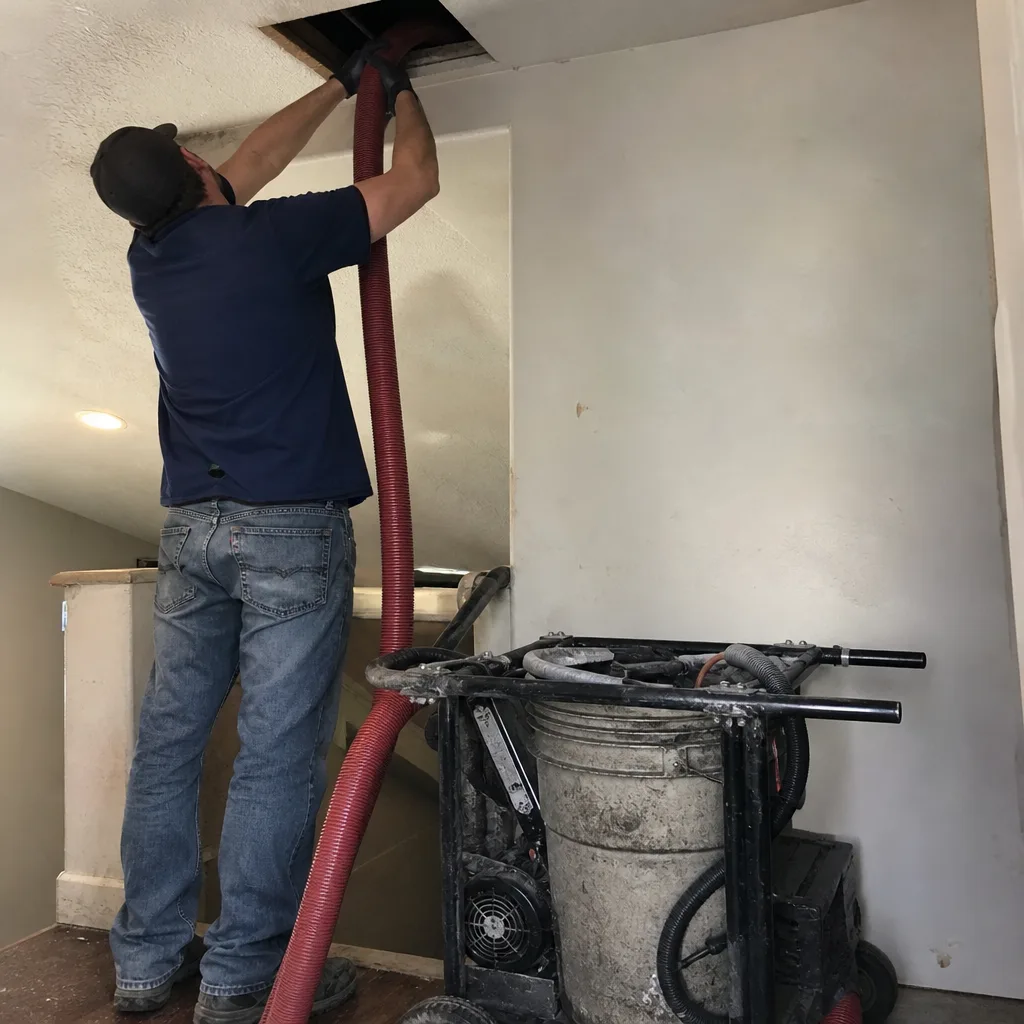
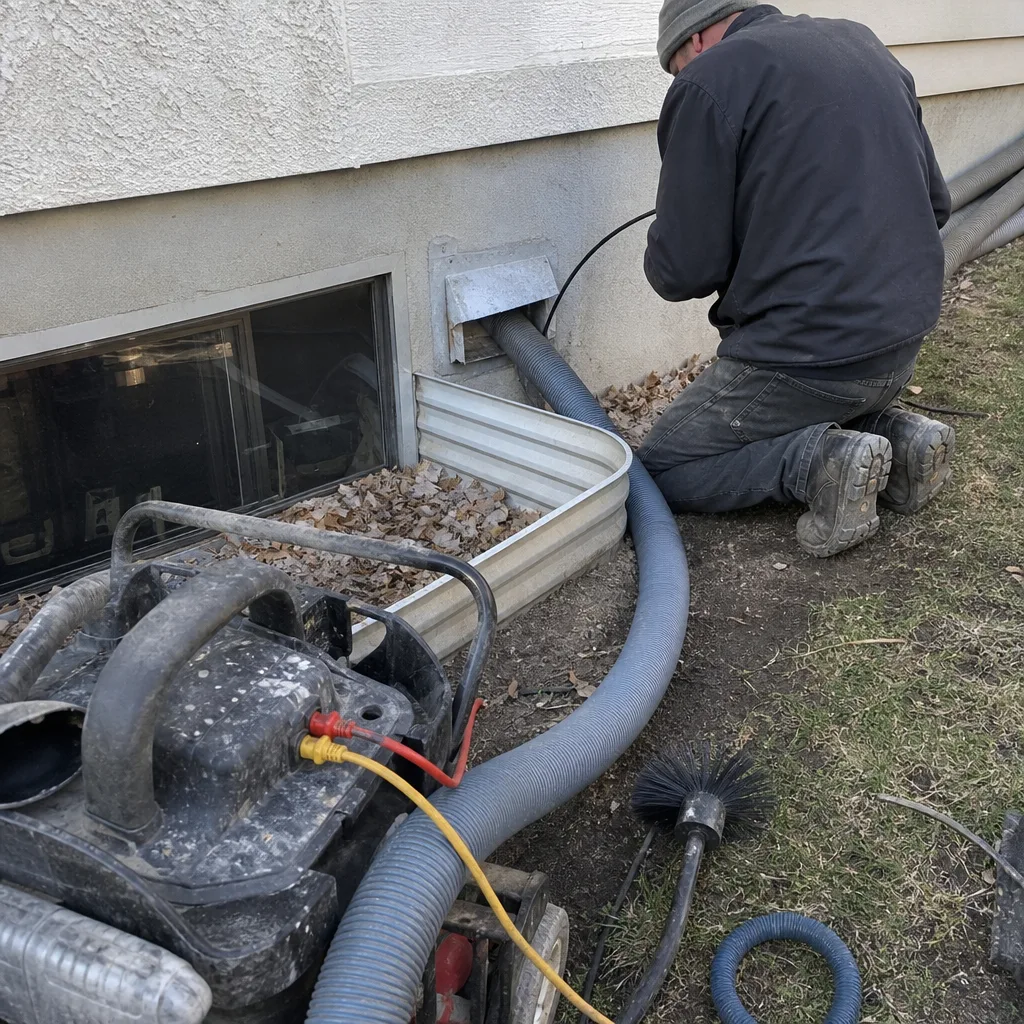
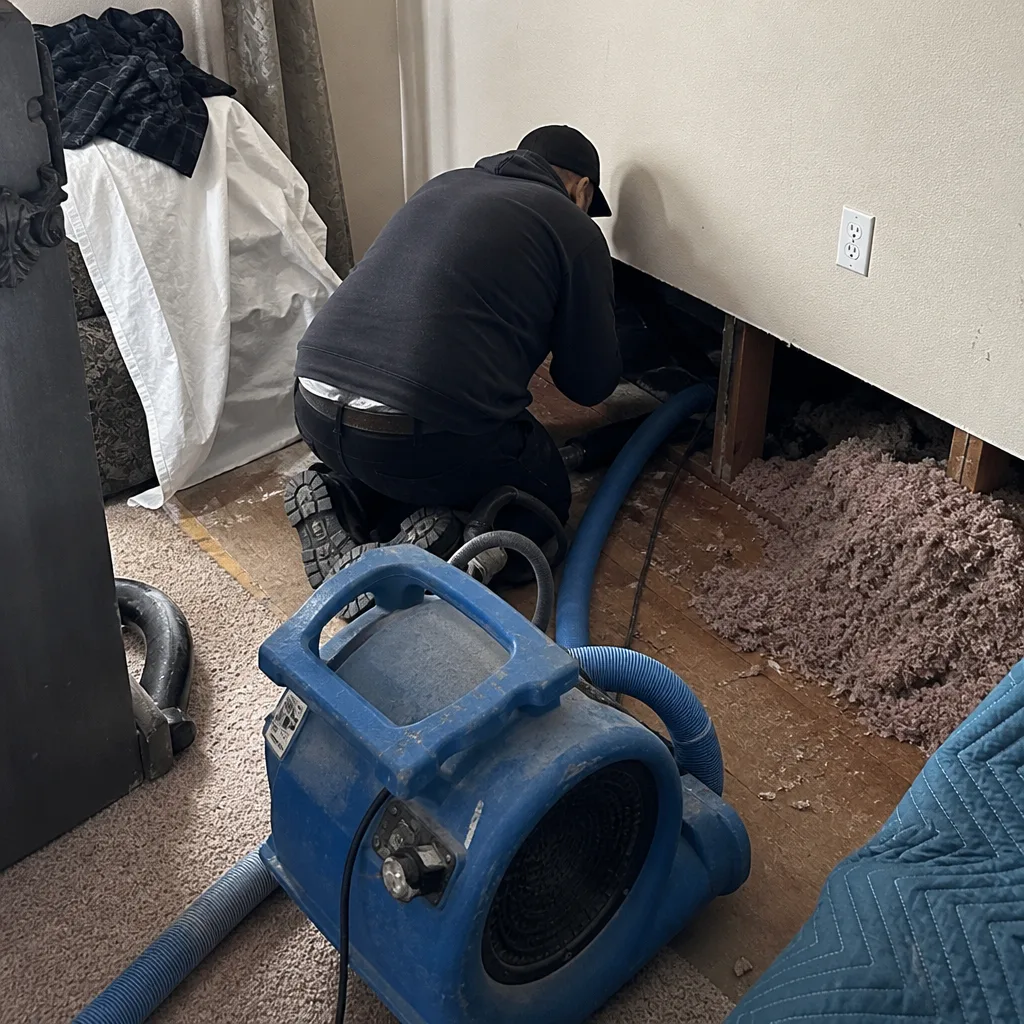
- Source removal cleaning using negative-pressure equipment and rotary agitation (Rotobrush and Nikro systems are what we run).
- Duct inspection with a camera to identify leaks, disconnected sections, and contamination pockets.
- Duct repair and sealing at joints, boots, and returns.
- Coil cleaning on the indoor evaporator and, where accessible, the outdoor condenser.
- Sanitizing after cleaning, using products such as Guardsman treatment where appropriate for surface protection.
- Air quality upgrades such as Aprilaire and Honeywell filtration or humidity control, installed as part of the visit.
The homeowner side matters more than most people think. A filter changed on time and registers wiped monthly can add 12 to 18 months to the interval between professional cleanings in our experience. That’s real money and real air quality.
Seasonal Timing in Lehi: When to Schedule
Lehi’s climate drives two high-value service windows. Get these right and each cleaning does more for you.
Window 1: Late Winter (February to March)
After a heating season of running the furnace hard, ducts have accumulated a winter’s worth of dust, and any leaks in the system have been pulling in cold-weather debris. Cleaning in late winter clears this before spring dust season begins. It also sets up the system for the transition to cooling.
Window 2: Early Spring (April to May, Before Cooling Season)
Cleaning before the AC starts its heavy summer run means you’re starting the cooling season with a clean system. This is also the right time for a duct inspection, since you’ll identify leaks and disconnected runs before cooling season puts stress on them. In homes where we time cleaning here, cooling season tends to run more efficiently and the register dust is noticeably lower by midsummer.
When to Skip the Seasonal Window
- After a renovation (clean as soon as the drywall dust settles).
- After moving into a home with unknown service history (clean before you move in or in the first month).
- When you notice visible dust blowing from registers (move the schedule up).
Lehi’s high-dust spring months (typically March through May) mean the pre-cooling-season window is genuinely the more productive of the two for most households. If you can only schedule one cleaning a year, target April or May.
Using Your Filter’s Loading Rate as a Contamination Gauge
Your filter is a real-time sensor, if you read it correctly. The speed at which a filter loads is a useful proxy for how fast your ducts are loading upstream of it. A filter that’s visibly gray after 30 days is telling you something about the whole system.
How to Read Your Filter
- Date the filter when you install it (write the install date on the frame).
- Check it at 30 days. If it’s still mostly white, your home is low-dust and your baseline can extend.
- Check at 60 days. If it’s visibly gray or coated, you’re in a normal-dust home. Keep your filter schedule monthly-ish.
- Check at 30 days again if it’s already gray. A filter loading in under 30 days tells you the ducts and the return system are doing a lot of work. Shorten your cleaning interval and consider an inspection.
- Track for two or three filter cycles. A sudden change in loading rate can point to a duct leak, a renovation, or a new pet in the home.
This trick is the single most useful thing we can hand a homeowner between cleanings. It’s real data from your own home, not a guess. A filter loading quickly almost always means the ducts are loading quickly too, and moving up the cleaning date is worthwhile.
The Maintenance Tasks Most Homeowners Skip
These are the maintenance items that, done on schedule, extend the time between professional duct cleanings more than people expect.
Dryer Vent Clearing (Annual)
A clogged dryer vent doesn’t just waste energy; it also pulls lint and dust into the surrounding air that eventually finds its way into the HVAC return. Annual professional dryer vent cleaning is the right schedule for most Lehi households, and more often if you have a large family or use the dryer heavily. This is also a genuine safety item, since lint buildup is a fire risk.
Coil Rinsing (Annual or Biennial)
A dirty evaporator coil reduces system efficiency and, over time, can cause the system to move less air, which lets contamination settle in the ducts instead of being carried to the filter. Coil cleaning during an HVAC cleaning visit keeps the whole air pathway running the way it should.
UV Lamp Replacement (Per Manufacturer Schedule)
If you have a UV lamp in the air handler or duct, replace it per the manufacturer’s recommended schedule. A lamp past its useful life stops doing its job while still drawing power and looking normal. Replace on the manufacturer’s timeline, not when you remember.
Duct Sealing Verification
Even a sealed duct system can develop new leaks. Have the system checked for leaks every 3 to 5 years. Sealing is one of the highest-leverage maintenance tasks in the whole home, since every leak is a path for dust and outside air to enter. Our Lehi Air Duct Cleaning Pros team handles repair and sealing as part of a scheduled visit, so it doesn’t require a separate service call.
Signs You Should Move Up Your Cleaning Date
The schedule is a guide; these signals are the override. If any of the following apply, don’t wait for the calendar.
- Visible dust blowing from registers when the system kicks on.
- Persistent musty or “dirty” smell when the HVAC runs.
- Allergy symptoms that worsen indoors and improve when you’re away.
- Recent renovation dust that you can see on household surfaces weeks after the project ended.
- New pet in the home (especially a heavy-shedding breed).
- Recent move-in with unknown service history.
- System running noticeably harder or longer than it did last season.
Common Mistakes to Avoid
- Treating the 3-to-5-year rule as a fixed schedule. It’s a baseline, not a rule. Homes with pets, allergy sufferers, or recent renovations need a shorter interval and may need it a year or more sooner than they expect.
- Skipping the duct inspection. Cleaning without checking for leaks and disconnected runs leaves the root cause in place, and the ducts recontaminate within months. Sealing is the finish, not an optional extra.
- Letting the filter run well past its change date. A loaded filter can’t do its job, and it forces the system to work harder while letting more dust settle in the ducts. Change on schedule, not on memory.
- Scheduling urgently for a symptom that’s really an airflow problem. If the issue is weak airflow or system performance, a duct inspection and air duct cleaning combo is often the right move, and we’ll tell you if the fix is outside what cleaning can do.
- Ignoring the dryer vent. A clogged dryer vent is a fire risk and an air quality issue. Annual clearing is the schedule most households need.
- Using consumer-grade tools on duct interiors. Shop-vacs and consumer brushes don’t extract settled debris the way negative-pressure and rotary agitation equipment do, and they can push contaminated air into living spaces instead of out of the home.
- Cleaning ducts without addressing coil and filter condition. A clean duct system with a dirty coil and a clogged filter recontaminates fast. The whole air pathway has to be on the same schedule.
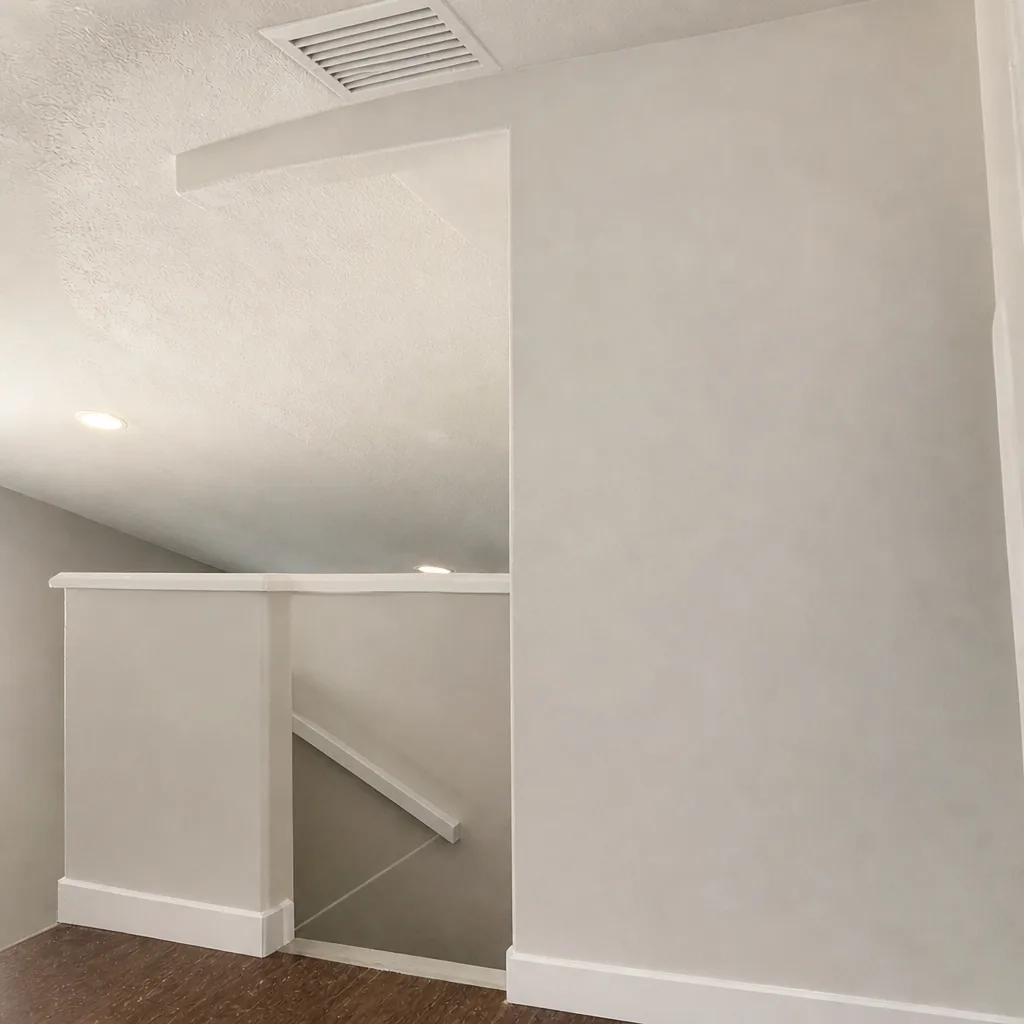
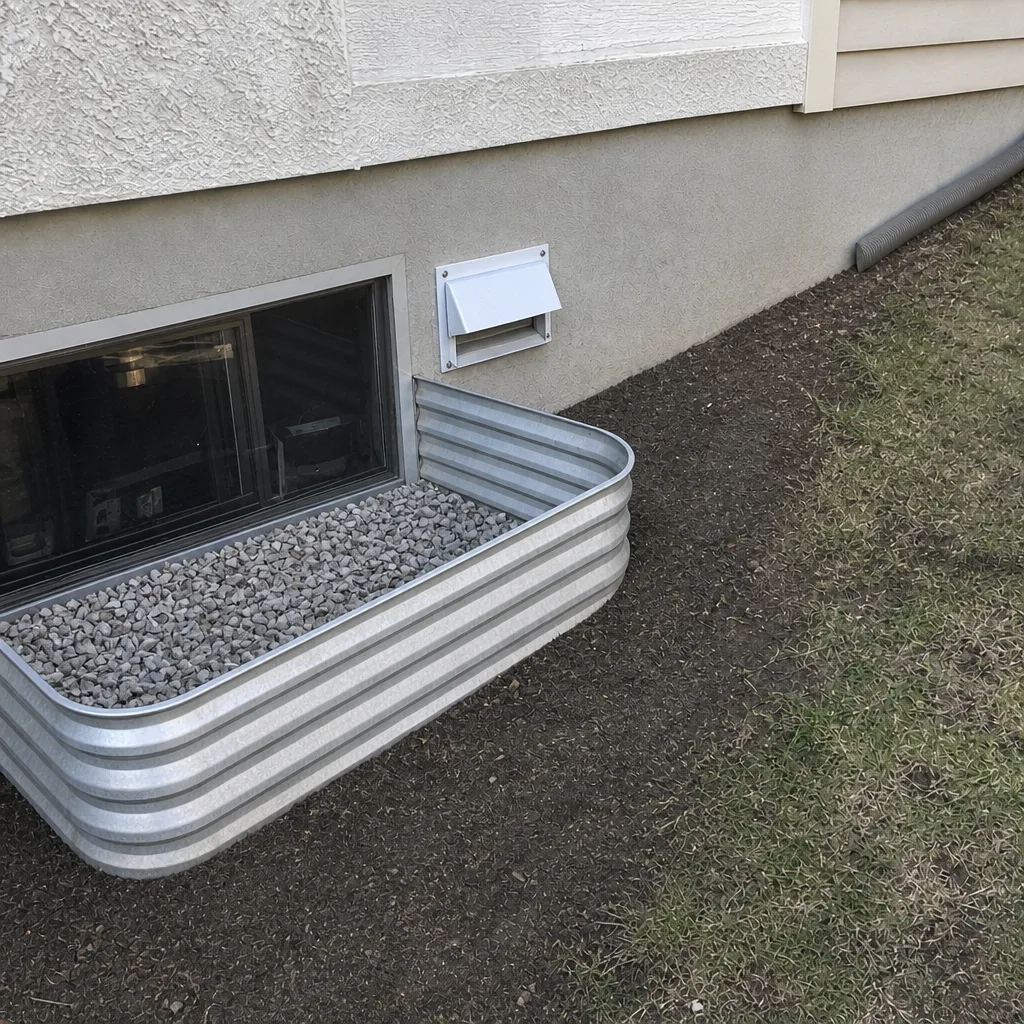
See the difference
 Before
 After
 Before
 After
 Before
 After
When to Call a Professional
Call a professional when you see visible dust blowing from registers, when anyone in the household has allergy symptoms that worsen indoors, after a renovation that generated drywall dust, when you move into a home with unknown duct history, or when your own visual checks show buildup inside ducts or at boot connections. Also call if you notice musty smells when the HVAC cycles or if you haven’t had a duct inspection in more than five years. Duct interiors and HVAC components are not a do-it-yourself project; negative-pressure equipment and rotary agitation are what make a real difference, along with careful containment during the job.
Lehi Air Duct Cleaning Pros offers free estimates in Lehi. Call (855) 579-6778. We answer 24/7. Fast dispatch from 7am to 7pm, Sunday through Friday.
Frequently Asked Questions
Every three to five years is a reasonable baseline for most Utah homes, but homes with pets, recent renovation dust, allergy sufferers, or leaky duct systems often need cleaning every two to three years. Lehi’s spring dust season and the long heating season both push the schedule toward the shorter end. Call (855) 579-6778 for an exact quote; estimates are free.
No. Annual cleaning is usually unnecessary for a well-sealed home with good filtration and no pets. That said, homes with heavy shedding pets, recent renovation, or household allergy sufferers can benefit from a shorter interval that lands closer to annual or every other year. The right schedule depends on your specific home. Call (855) 579-6778 to talk through your situation.
Late winter (after heating season) and early spring (before cooling season) are the two highest-value windows in Lehi. If you can only do one, target April or May so you start cooling season with a clean system. Either window pairs well with an HVAC cleaning and coil rinse. Call (855) 579-6778 for a free estimate.
You can handle surface tasks like filter changes and register wiping, and those make a real difference. Duct interiors require negative-pressure equipment and rotary agitation that consumer tools can’t match, and DIY attempts risk pushing contaminated air into living spaces. A professional cleaning is the right call for anything inside the ducts. Call (855) 579-6778 to get an exact quote.
Watch for visible dust blowing from registers, musty smells when the system runs, allergy symptoms that worsen indoors, or recent renovation dust still visible weeks after the project ended. Your filter’s loading rate is also a useful gauge: a filter that’s visibly gray within 30 days is telling you the ducts and returns are working hard. Call (855) 579-6778 to schedule an inspection and free estimate.
Cleaner ducts lower the overall particle load that the system distributes through the home, which can help allergy sufferers, especially in a dry climate where dust stays airborne longer. It works best as part of a whole-system approach that also includes duct sealing, a quality filter, and regular coil cleaning. Call (855) 579-6778 to talk through what makes sense for your home.
The Bottom Line
Air duct cleaning isn’t a one-size-fits-all calendar. Start with a baseline interval for your home age and duct material, then shorten it for pets, allergies, recent renovation, older leaky ducts, or Lehi’s spring dust season. Handle the homeowner tasks yourself (filter, registers, visual checks), let a professional take on anything inside the ducts (cleaning, sealing, coil work, sanitizing), and time your cleanings to late winter and early spring for the most value. Read your filter as a contamination gauge between visits. Call (855) 579-6778 for a free estimate. We answer 24/7. Fast dispatch from 7am to 7pm, Sunday through Friday.
Written by the team at Lehi Air Duct Cleaning Pros.