
Last updated November 25, 2026
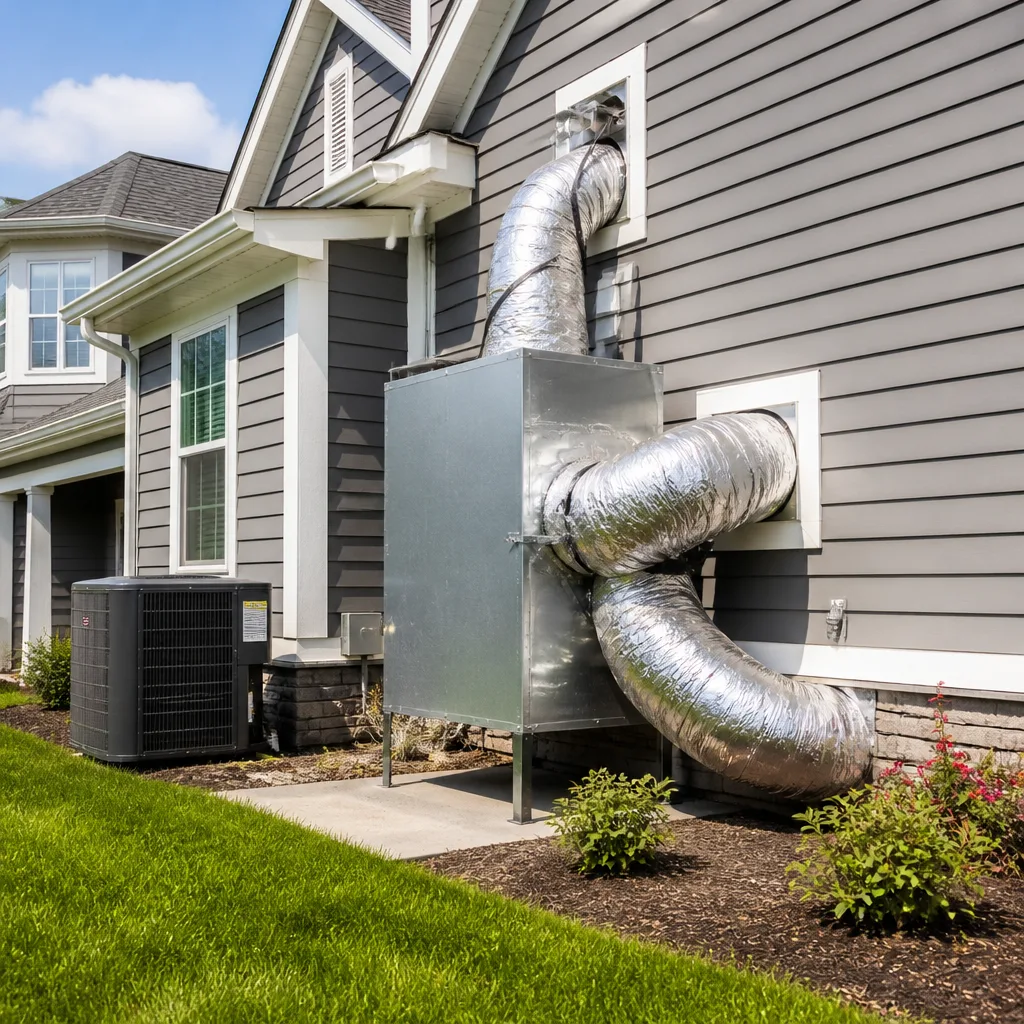 Whole-home duct cleaning
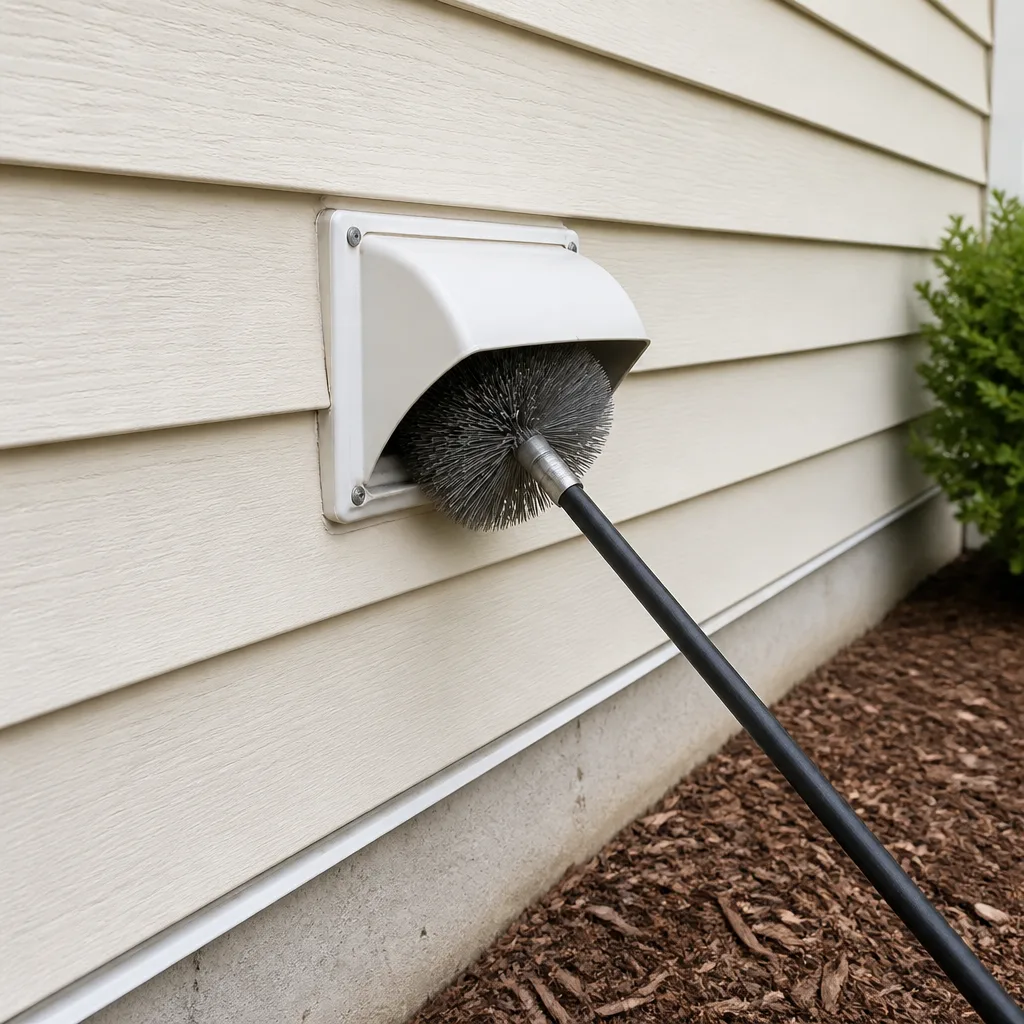 Dryer vent cleaning
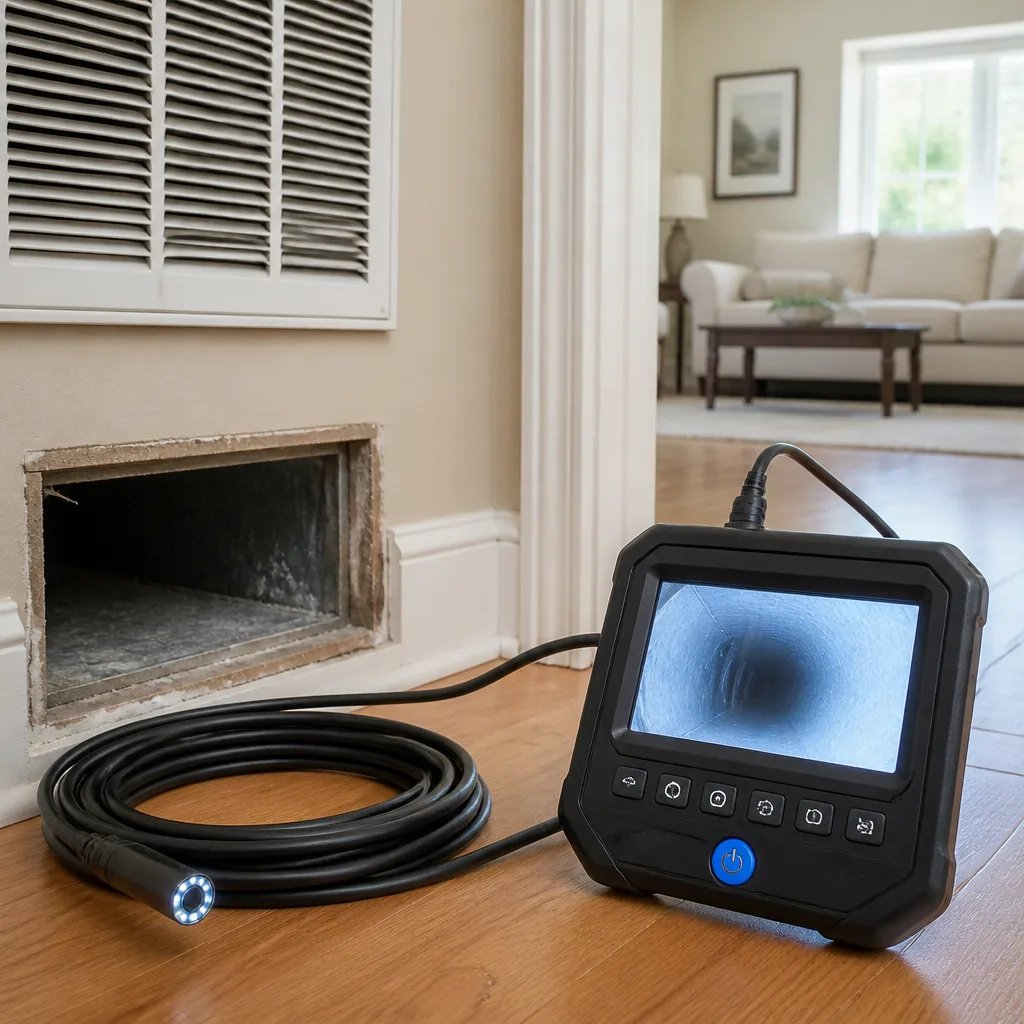 Camera inspection
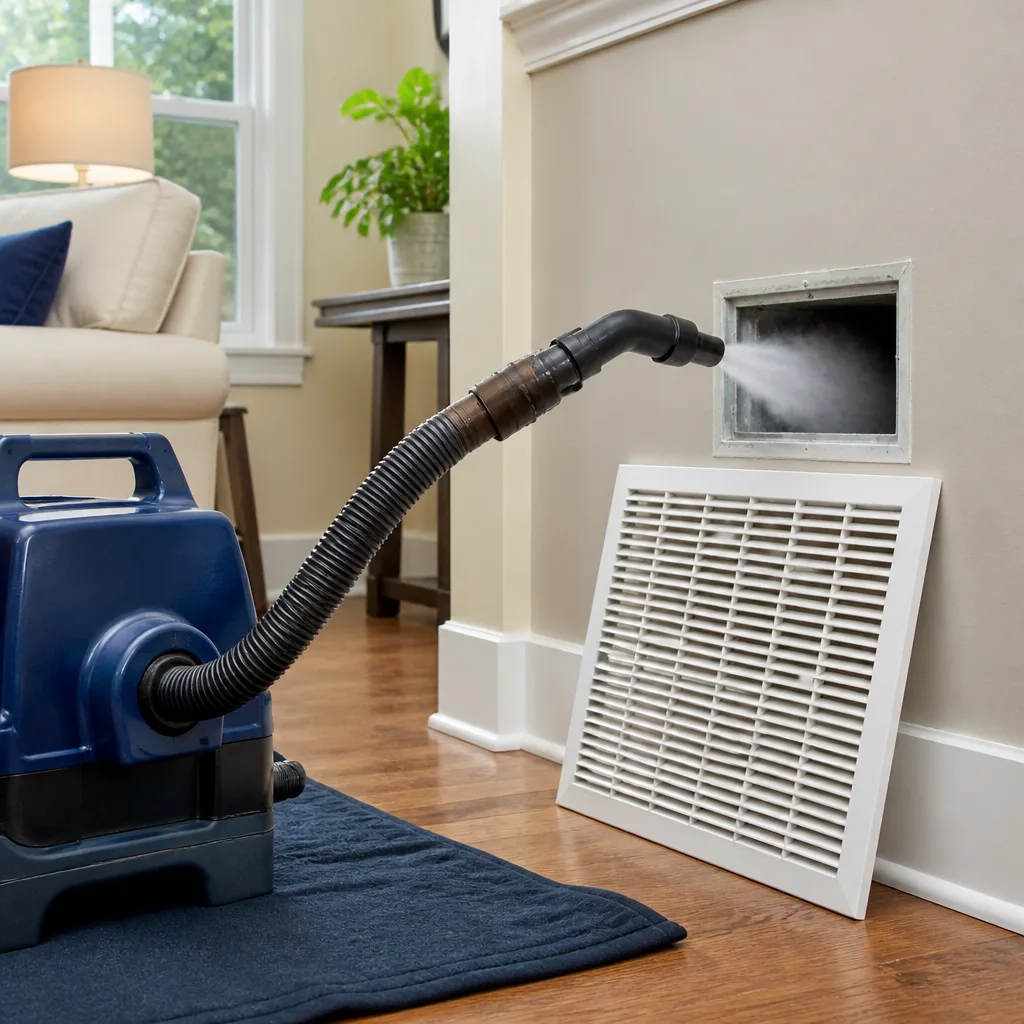 Sanitizing & deodorizing
Whole-system duct and dryer vent check with before-and-after photos - you see exactly what came out of your vents
That "$99 whole-house special" is a bait ad - the real number appears once they are in your hallway, or the "clean" is a shop-vac at the register. We photograph the inside of your ducts before and after instead.
How to Hire an Air Duct Cleaning Contractor in Lehi: A Step-by-Step Guide
A “$99 whole-house duct cleaning” ad is likely running in front of Lehi homeowners right now. The number is real. What it buys usually isn’t. In our experience, that teaser is a door-opener: the technician arrives, runs a camera or a light through a main trunk, points at dust, and explains that the “$99” covers only “one main line.” The full job, including the return side, the boot runs, and the equipment that actually removes debris rather than stirs it, comes in far higher. This guide walks through how to separate a legitimate contractor from a low-ball operator before any money changes hands in Lehi. You’ll learn the screening questions, the red flags, and the equipment checks that do the sorting for you.
Quick Answer
Hire an air duct cleaning contractor in Lehi by verifying four things before you book: current NADCA membership in good standing, truck-mounted or high-capacity negative-pressure vacuum equipment, a written itemized quote that prices the whole system rather than per vent, and a post-job verification commitment (photos, airflow readings, or NADCA-compliant documentation). Any contractor who won’t put those four in writing before showing up isn’t the one to hire. The screening takes about ten minutes and saves hours of argument at the door.
Styles & brands we work with
- Whole-home duct cleaning
- Dryer vent cleaning
- Camera inspection
- Sanitizing & deodorizing
Table of Contents
- Why hiring the right duct cleaner matters in Lehi
- How to verify NADCA membership in under 60 seconds
- The equipment a legitimate contractor arrives with
- How to read a written duct cleaning quote
- Why the return side is where corners get cut
- What post-job verification should look like
- The three questions that expose a low-ball operator
- Common mistakes to avoid
Why Hiring the Right Duct Cleaner Matters in Lehi
Lehi sits in Utah Valley, where the winter inversion traps fine particulate in the air for weeks at a stretch. Homes here are closed up tight through January and February, and the furnace runs hard. That means the duct system is doing more work than it would in a milder climate, cycling the same air through the same pathways day after day. Add the construction dust from new builds and remodels around the city, and the case for a properly cleaned system gets stronger each year.
But cleaning a duct system badly can put more particulate into the living space than it removes. A shop-vac rig without negative-pressure control agitates settled dust and blows it back through the registers. A contractor who cleans only the supply side and skips the returns leaves half the system untouched. A contractor who “sanitizes” without first removing the debris is spraying over a problem. The gap between a good job and a bad one doesn’t show up on the invoice. It shows up over the next six months, in air quality you can feel and in a system that still has the original dust load sitting in it.
That’s the reason this hiring guide leans on equipment and documentation rather than price. Price tells you nothing about what the technician will actually do inside your walls. Equipment, process, and paperwork tell you everything.
How to Verify NADCA Membership in Under 60 Seconds
NADCA, the National Air Duct Cleaners Association, is the trade body that sets the industry standard for duct cleaning. Membership isn’t a license and it isn’t required by law, but a current membership in good standing tells you a contractor has accepted a published code of ethics and access to a specific body of assessment, cleaning, and restoration standards. When a contractor claims membership, verifying it should take less than a minute.
- Ask for the company name as it appears on the membership. Not the brand name on the truck. The registered entity.
- Look up that exact name in the NADCA contractor directory. The directory is public and searchable online. Type the name and city.
- Confirm the status. A legitimate member shows as active. If the listing is missing or expired, ask why.
- Ask who on the crew holds the certification. Membership is at the company level; individual certification is separate. A crew lead who has passed the NADCA Air Systems Cleaning Specialist exam is a stronger signal than a logo on a website.
What to do if the answer is “we’re not NADCA members”: that’s not an automatic disqualifier, but it raises the bar on everything else. Ask about standards compliance directly, and ask for written references from recent local jobs. Membership in good standing is the standard the rest of this guide builds on.
The Equipment a Legitimate Contractor Arrives With
The single most useful thing you can do on a hiring call is ask about equipment by name. A contractor with the right equipment will describe it in detail. A contractor with a shop-vac rig will talk in generalities.
The industry-standard setup is a truck-mounted or high-capacity vacuum source with a negative-pressure capability. The concept is simple: the vacuum creates a pressure differential that keeps the duct system under consistent negative pressure while the technician works. Debris is pulled toward the collection point, not released into the room. A hose connected to a portable shop-vac has no real negative-pressure control. It agitates material and leaves it in the living space.
Inside the ducts, the technician uses rotary brush agitation equipment to loosen bonded debris from the duct walls before the vacuum extracts it. Consumer or consumer-grade tools can’t do that. The professional-grade brands the industry trusts are things like Rotobrush and Nikro. We operate both on every job, for the simple reason that agitation and extraction need to work in tandem. One without the other just moves the dust around.
Three equipment questions to ask on the hiring call:
- What’s your vacuum source? Look for truck-mounted or high-capacity equipment with negative-pressure capability. “We bring our own equipment” doesn’t answer it.
- What do you agitate the duct walls with? Rotary brush tools by a known professional brand. If they say “our technician uses a brush,” ask for specifics.
- Do you set up containment? Abatement-grade air filtration (the kind of equipment that keeps the work area under controlled filtration during cleaning) is standard for professional crews. If a contractor works without it, ask why.
How to Read a Written Duct Cleaning Quote
A written quote is the other critical tool in the screening. If a contractor won’t put the quote in writing before they show up, that’s your answer. A quote you can read line by line protects you from the bait-and-switch pattern: the $99 price on the ad becomes $400 at the door because the quote was never itemized.
Line items that should always be present in a legitimate written quote for air duct cleaning:
- Number of supply and return vents being serviced. Both sides, not just supply.
- Equipment specified. Truck-mounted or high-capacity vacuum by name or type; rotary brush brand or system.
- Containment and filtration setup. Abatement-grade filtration, work-area sealing, register covers.
- Sanitizing, if included. Product name and whether it’s a post-clean step (it should be).
- Any repair or sealing work quoted separately. Gaps and leaks are common and often need addressing, but they shouldn’t be a surprise at the door.
- What the job does not include. Clarity on exclusions is a sign of honesty, not a red flag.
- Final price per system. One number for the whole system, written down, with a line for the customer’s signature.
Vague language is the tell. Phrases like “starting at,” “based on inspection,” and “as needed” open the door to the invoice creep you’re trying to avoid. A legitimate quote prices the work in advance and doesn’t add lines once the technician is on the property.
Why the Return Side Is Where Corners Get Cut
If you only remember one point from this guide, make it this one. The return side of a duct system is the most labor-intensive part of a full cleaning job. That is exactly why the cheapest bids skip it.
The supply side pushes conditioned air from the furnace out to the rooms. The return side pulls air back to the furnace. Return ducts are typically larger, run through framing cavities, and are often harder to access than supply runs. They also tend to collect more debris, because they’re carrying the air from the rooms back to the system. On a well-designed job, both sides are cleaned to equal standard. On a short-cut job, the technician cleans the visible supply registers, opens a couple of easy runs, and calls it done.
This matters for air quality because the return side is part of the same closed loop. Dust sitting in the return is dust the furnace cycles back into the supply once the system runs. Cleaning supply only means the air you breathe still passes through a contaminated return channel before it reaches the filter. The HVAC filter catches some of it, but the filter is the last line of defense, not a substitute for cleaning the pathways.
How to verify the return side was actually addressed:
- Ask how many returns are on the system before the appointment. The technician should know the count.
- Ask the technician to show you the return-side work during the job. A contractor with nothing to hide will.
- Get the return count on the written quote so you can compare what was promised to what was done.
When we quote HVAC cleaning and duct work together, we price the return side explicitly. It’s the work that determines whether the job actually improves circulation or just freshens the surface.
What Post-Job Verification Should Look Like
A reputable contractor doesn’t just clean and leave. They give you evidence the work was done and the standard was met. Without that evidence, you’re relying on trust, and trust is exactly what low-ball operators trade on.
Three verification types to expect (at least one, ideally two, on any job you pay for):
- Bore scope photos. A small camera goes into the ducts before and after cleaning. You see what the duct walls looked like before, and what they look like after. Photos should be timestamped and show the specific runs cleaned.
- Airflow readings. A technician measuring airflow at the registers before and after cleaning gives you a quantitative record. Not every job requires a full measurement, but professional crews can produce one.
- Written NADCA-compliant service documentation. A summary report listing the equipment used, the areas cleaned, the conditions found, and any repair or sealing issues observed. This is the record you want to keep, especially if the home is under a warranty or insured.
If a contractor has no verification step, that’s the answer. Ask them to describe their after-job process in detail. If the response is “you’ll notice the difference,” you’re dealing with an operator who intends to leave without evidence.
The Three Questions That Expose a Low-Ball Operator
Of everything in this guide, these three questions do the most work in the shortest time. Ask them on the phone, before booking. The answers are more telling than the price.
- “Is that your final price for the whole system, and will you put it in writing before you arrive?” A legitimate contractor says yes and writes it down. A low-ball operator says “we’ll be able to give you an exact number when we see it.” That number will be larger than the ad.
- “How many return vents are on my system, and are they included?” The count should be answerable by the contractor before arrival (it’s on the work order), and the returns should be explicitly included. If either answer is vague, expect the return side to be skipped.
- “What’s your post-job documentation?” A contractor with a process describes the photos, readings, or written report in specific terms. A contractor without one describes it as “you’ll notice a difference” or changes the subject.
Three questions, ten minutes, and the price comparison becomes meaningless because you already know who’s legitimate and who isn’t. In a market where the gap between the honest price and the bait-and-switch price is a hundred dollars on the ad, this screening is worth doing every single time. For a deeper look at what the right contractor actually should be doing during a proper air duct cleaning, the process needs to be physically thorough, not just visually convincing.
Common Mistakes to Avoid
- Booking off the ad price alone. The “$99” you see on a lawn sign or a mailer is a marketing number, not a quote. Ask for the written whole-system price before you schedule. In Lehi, the difference between an ad price and a legitimate quote is usually enough to justify ten minutes of screening calls.
- Not asking about NADCA membership. A contractor who says “we’re NADCA-certified” without you checking the directory is giving you a claim, not a fact. The directory lookup takes less than a minute. Do it before booking.
- Assuming all “duct cleaning” is the same scope. Supply-only cleaning, return-side cleaning, HVAC coil cleaning, and dryer vent cleaning are four different jobs. Each should be listed separately on the quote. A contractor who lumps them together is likely doing neither thoroughly.
- Ignoring the return-side count on the quote. If it’s not on the quote, it won’t be done. Supply-side-only cleaning doesn’t fix air quality in a Lehi home where the furnace cycles return air back into the living space all winter.
- Accepting “you’ll notice the difference” as verification. Ask for photos, readings, or a written report. A reputable contractor provides at least one. A low-ball operator provides excuses.
- Skipping the duct sealing conversation. Cleaning a system with known gaps and leaks is cleaning a pathway that will leak again. Ask on the hiring call whether repair or sealing will be part of the job, and what it costs if needed.
- Not coordinating dryer vent and HVAC work with the ducts. A full air-pathway job addresses all three. Booking three separate contractors means three separate trips and three chances for one of them to be skipped. A single visit covering dryer vent cleaning and HVAC work alongside the ducts is more thorough and more trackable.
See the difference
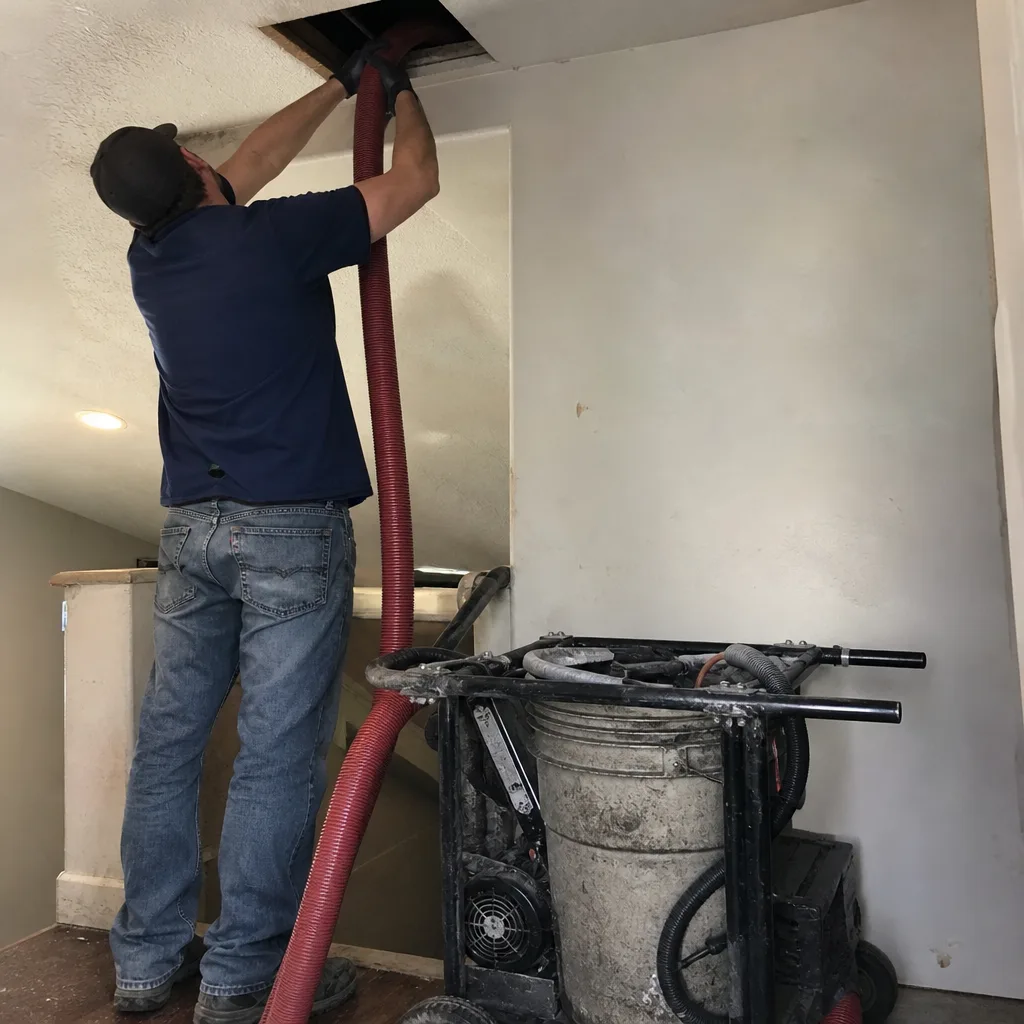 Before
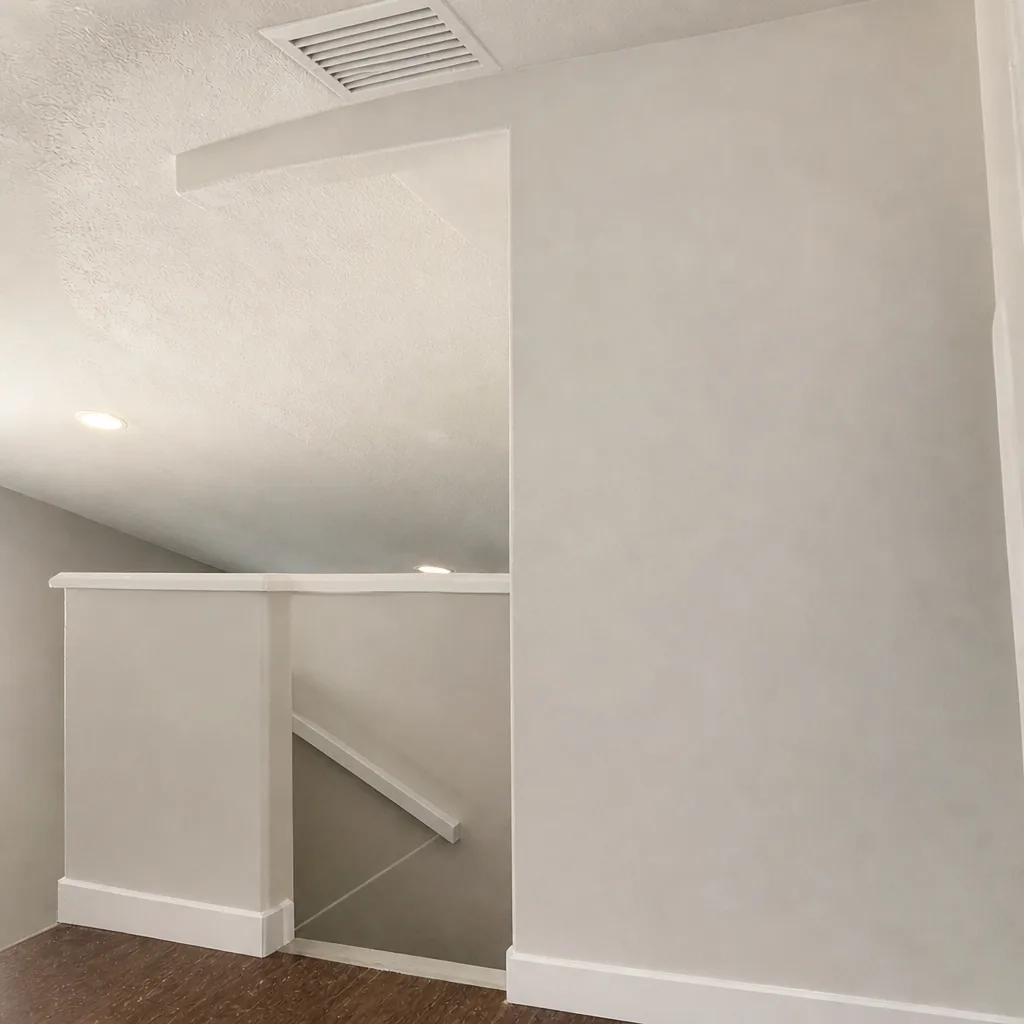 After
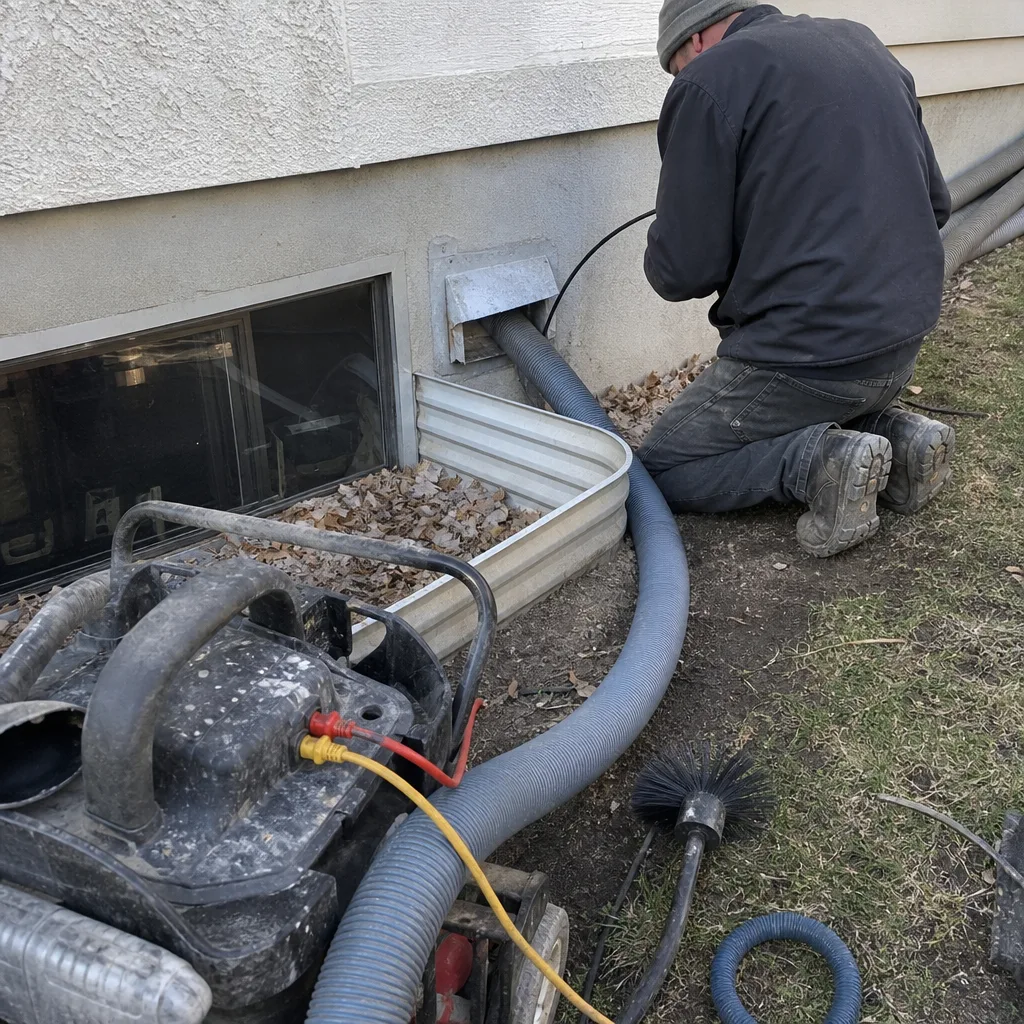 Before
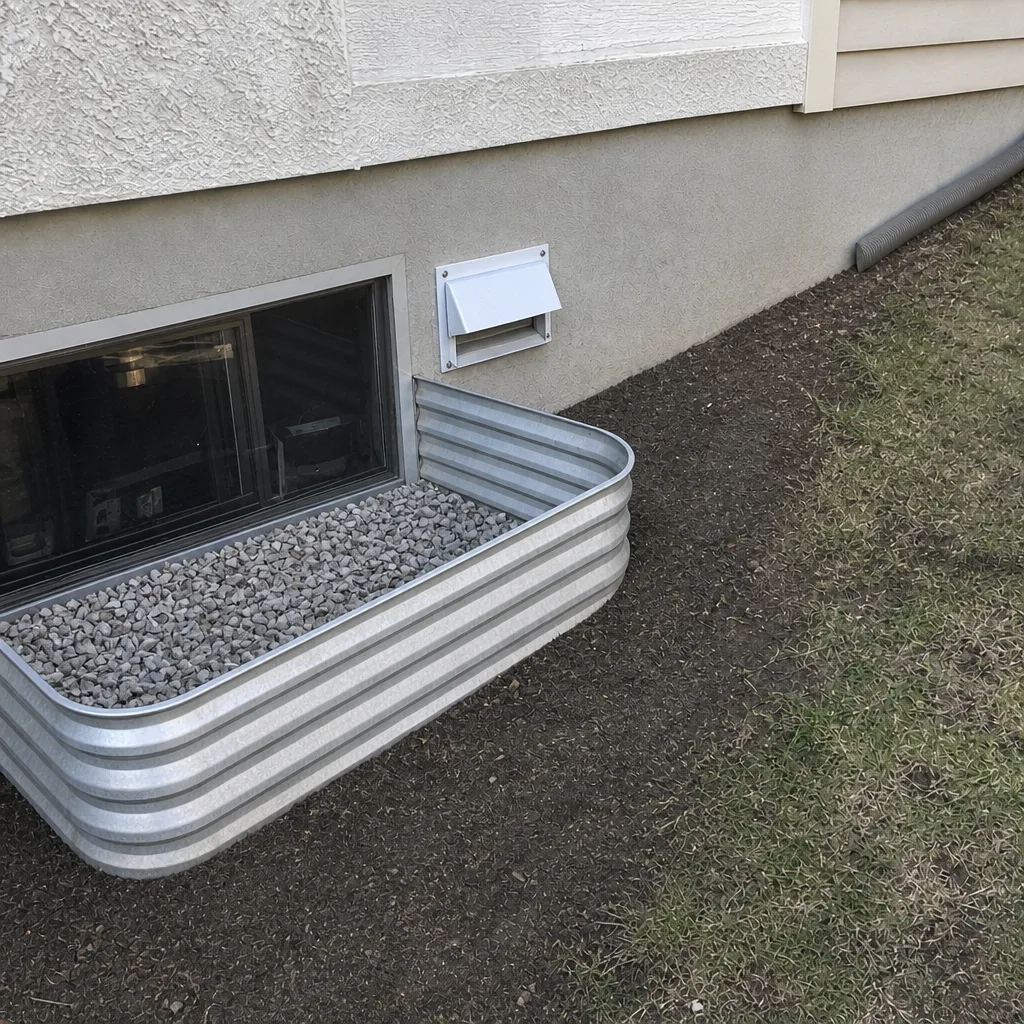 After
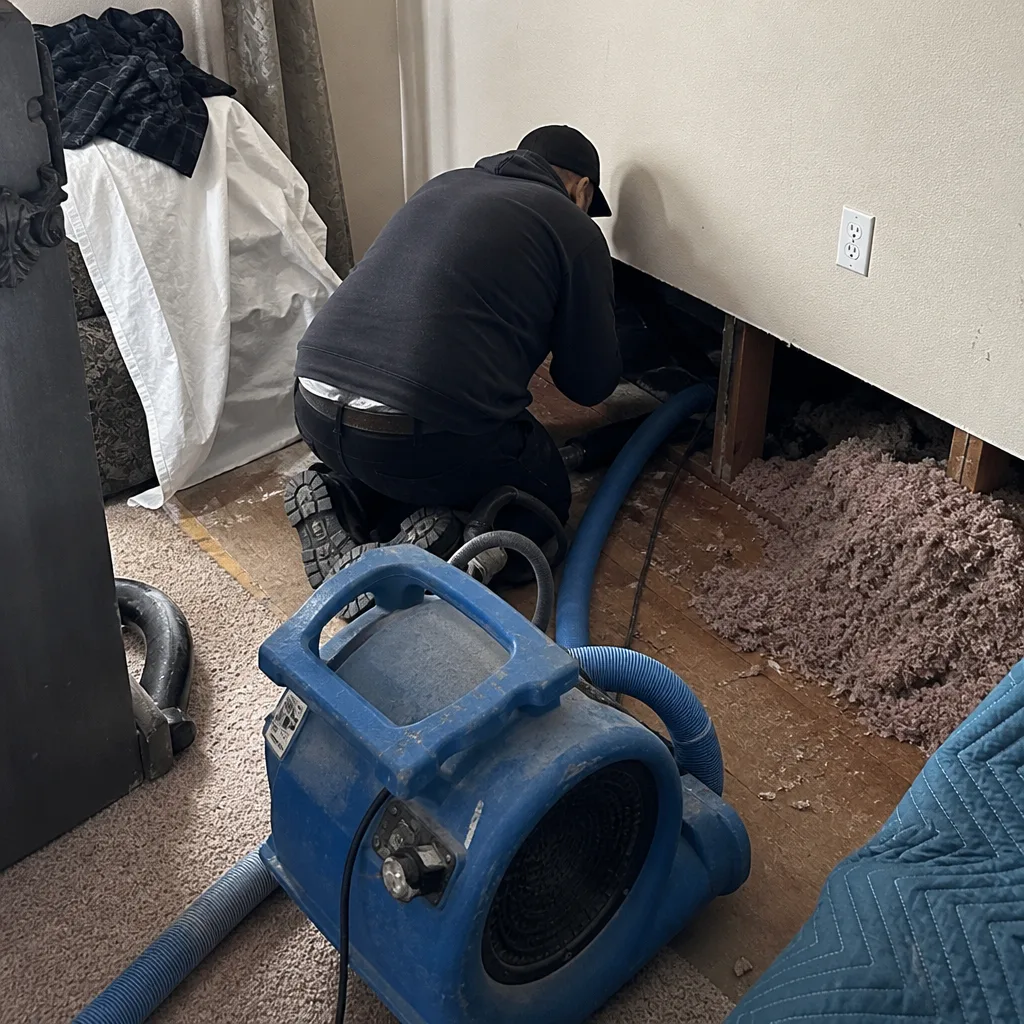 Before
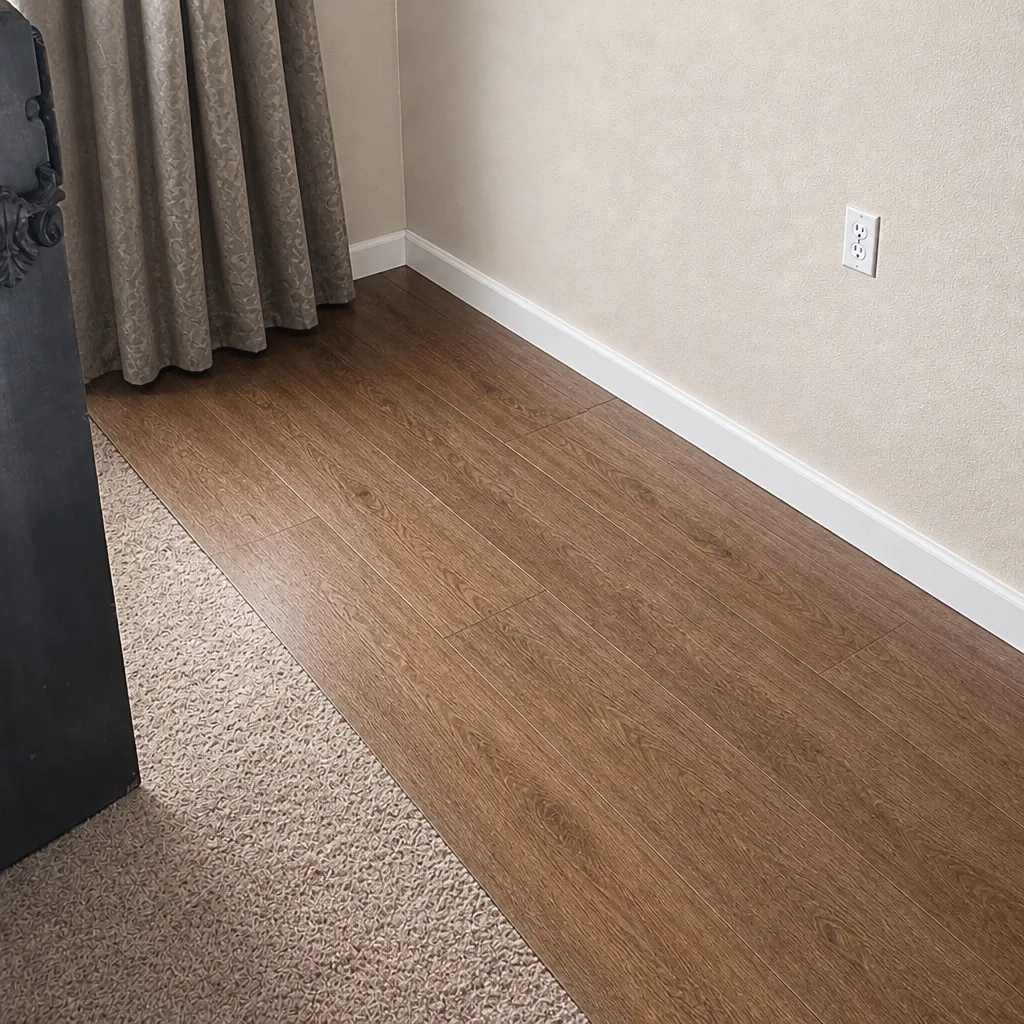 After
When to Call a Professional
Some homeowners know exactly when to schedule duct service. Others aren’t sure. Here are the scenarios that make a professional appointment worth booking in Lehi: recent renovation or new construction (dust can settle in the system for months after a job), a new HVAC installation (new equipment deserves a clean pathway), allergy or asthma in the household where indoor air quality matters, visible dust streaks at the registers, a dryer that takes two cycles to dry a load (the vent is part of the air pathway), or a home that hasn’t had duct service in several years.
Some jobs are best left to a trained professional entirely. Electrical panels and gas lines connected to the HVAC system are dangerous components: anything involving wiring or gas connections calls for a licensed trade specialist, not a duct cleaner. If a technician offers to open a panel or disconnect a gas line as part of the cleaning, that’s a reason to call someone else. Duct interior work with rotary brush equipment is safe to handle professionally because the equipment is designed for the purpose, but the work needs to be done by someone trained on that equipment.
Lehi Air Duct Cleaning Pros offers free estimates in Lehi. Call (855) 579-6778. We answer 24/7. Fast dispatch from 7am to 7pm, Sunday through Friday. The estimate is free and the price is set per job by the written estimate before work begins.
Frequently Asked Questions
Estimates for whole-system air duct cleaning in the Lehi area typically range from a few hundred to just over a thousand dollars depending on the size of the home, the number of supply and return vents, and whether repair or sealing work is needed. That’s an estimate range, not a quote. The written estimate sets the final price. Call (855) 579-6778 for an exact quote – estimates are free.
Low quotes are usually teaser pricing that covers a fraction of the job. A “$99” quote often means one main trunk line and a couple of visible registers, not the whole system. The technician arrives, inspects, and reports that the returns, the boot runs, or the branch lines aren’t included. The real job starts at a second number, often several times the ad price. A legitimate quote prices the whole system in writing before arrival. If the quote seems unrealistically low, ask what’s excluded. Call (855) 579-6778 for a written whole-system estimate.
Ask the contractor for the exact company name on their NADCA membership, then search that name in the public NADCA contractor directory online. The lookup takes under a minute. A legitimate member shows as active in good standing. If the company says they’re a member but doesn’t appear, or appears as expired, ask why before booking. Call (855) 579-6778 if you want help understanding the standard.
Ask for before-and-after bore scope photos of the specific duct runs, airflow readings at the registers, or a written service summary documenting the equipment used and areas cleaned. A reputable contractor provides at least one of these as part of the job. If the answer is “you’ll notice a difference,” ask for documentation in writing before booking. Call (855) 579-6778 for a free estimate and to talk through what our post-job verification includes.
Most homes benefit from duct cleaning every three to five years, but the interval depends on the home. Recent renovation, new HVAC installation, pets, allergy concerns, or heavy winter use of a forced-air system can push the interval shorter. A home that’s had no duct service in a decade and shows visible dust at the registers has likely gone past the useful interval. Call (855) 579-6778 to talk through your home’s situation – estimates are free.
A legitimate contractor should arrive with a truck-mounted or high-capacity vacuum with negative-pressure capability, a professional rotary brush agitation system (brands like Rotobrush or Nikro are industry-standard), and abatement-grade air filtration equipment for containment. If the setup looks like a shop-vac on a hose, it’s not the right equipment for the job. We operate Rotobrush and Nikro equipment and use abatement-grade filtration on every job. Call (855) 579-6778 for a free estimate on your Lehi home.
The Bottom Line
The duct cleaning market in Lehi rewards homeowners who ask for specifics and punishes those who shop on price alone. Verify NADCA membership, look up the company in the public directory, ask about truck-mounted negative-pressure equipment and rotary brush tools by name, get the whole-system price in writing before the technician arrives, and confirm there’s a post-job verification step. Those five checks take ten minutes on the phone and save you from the bait-and-switch that the lowest ad price always hides. An honest contractor will pass all five without hesitation. A low-ball operator will stumble on at least two. The difference is the quality of the air your family breathes all winter.
Lehi Air Duct Cleaning Pros handles the full air pathway, which means cleaning, dryer vent work, HVAC cleaning, and duct repair and sealing under one visit. We work with Aprilaire and Honeywell air quality products and Guardsman treatment options so the whole system gets addressed rather than just freshened. Our technicians have up to 15 years of experience, and we bring professional-grade equipment to every job. One call covers your entire air pathway. For a free estimate, call our team, we’re ready to walk through your system with you.
Call (855) 579-6778. We answer 24/7. Fast dispatch from 7am to 7pm, Sunday through Friday. The estimate is free and the written price you receive is what you’ll pay. Get your exact quote before you book.
Written by the team at Lehi Air Duct Cleaning Pros.